

Guided Protection for Your Vision
Many serious eye conditions develop quietly behind the scenes without causing pain or sudden changes to your sight. By the time you notice a difference in your vision, damage to the inner structures of your eye may already have taken place.
Routine eye exams give your optometrist a chance to look closely at these delicate structures and catch early signs of disease long before your sight is affected. Conditions that affect your whole body, like diabetes, can also increase your risk of eye complications, making regular monitoring a wonderful way to protect your overall health.
At InVision Eyecare, our team provides thorough assessments, ongoing monitoring, and personalized management for many different conditions. Let us care for your eyes by booking a comprehensive eye exam today.
Modern Technology for Gentle, Precise Care
Looking after your eyes means seeing way past the surface. Our clinic uses gentle diagnostic equipment to capture clear pictures of the delicate blood vessels, nerve fibres, and tissues inside your eyes.
Optical coherence tomography (OCT) creates detailed layer-by-layer scans of your retina, while high-definition retinal imaging takes ultra-clear pictures of your inner eye. We also use visual field testing to evaluate your side vision and tonometry to measure gentle eye pressure.
Together, these comfortable, noninvasive scans help us spot minor shifts early and keep track of your eye health through the years.

Clear Guidance on Glaucoma
Glaucoma refers to a group of eye conditions that gradually affect the optic nerve, which carries visual information from your eye to your brain. It often happens when pressure inside the eye rises, though it can occur even with standard pressure levels.
As glaucoma usually starts by affecting your peripheral vision, it can develop without early warning signs. Regular eye checkups are a simple, proactive way to protect your full field of view.
Open-angle glaucoma is the most common form, developing slowly over time as fluid drainage channels become slightly clogged.
Angle-closure glaucoma happens when drainage pathways close suddenly, causing a rapid rise in eye pressure that requires immediate attention.
Normal-tension glaucoma causes changes to the optic nerve even when internal eye pressure stays within standard ranges.
We evaluate your eyes using a group of simple, comfortable tests.
Tonometry gently measures internal eye pressure, while OCT scans create clear maps of your optic nerve. Visual field testing checks your side vision for subtle dark spots you might not notice on your own. Together, these checks provide a clear baseline picture to monitor over time.
While vision loss from glaucoma cannot be reversed, starting care early helps preserve your remaining sight. Management often involves daily prescription eye drops that lower eye pressure and help fluid drain comfortably.
Your optometrist monitors your progress closely and can connect you with a trusted local eye surgeon for laser or surgical options if needed.
Information About Cataracts
A cataract is a natural, gradual clouding of the eye’s clear lens, which sits right behind your pupil. As protein naturally builds up on the lens over time, light scatters instead of focusing smoothly on your retina. This creates a foggy effect, much like trying to look through a steam-covered window.
Cataracts are a normal part of getting older, but simple management helps keep your view clear and comfortable every day.
Common signs include:
- Blurry vision
- Sensitivity to bright sunlight
- Difficulty driving at night
- Colours appearing dull or faded
- Frequent changes to your glasses prescription
Aging is the main reason cataracts develop, though a few other lifestyle factors can speed up lens changes.
Years of enjoying sunny days without UV-blocking sunglasses, smoking, and health conditions like diabetes play a role. Using steroid medications for long periods or having a previous eye injury can also lead to earlier cataract formation.
In the early stages, updating your glasses prescription, using brighter reading lamps, and wearing anti-glare sunglasses bring great relief.
When clouding starts interfering with your favourite daily activities, we arrange a warm referral to an experienced local eye surgeon for a quick lens replacement procedure, supporting you through every step of recovery.
Navigating Age-Related Macular Degeneration Together
Age-related macular degeneration (AMD) affects the macula, the small central part of your retina responsible for sharp, straight-ahead vision. While AMD rarely affects your side vision or causes total sight loss, changes in central vision can make everyday tasks like reading, recognizing loved ones, driving, and crafting more challenging.
Routine monitoring gives us the opportunity to protect your central sight so you can keep enjoying the hobbies you love.
Dry AMD is the most common form, caused by gradual thinning of macular tissue and small protein deposits called drusen.
Wet AMD is less common but requires quicker attention, occurring when tiny, fragile blood vessels grow under the retina and leak fluid or blood, leading to sudden central vision changes.
Age is the primary factor, with likelihood increasing after age 50. Family genetics also play a strong role in whether you develop macular changes over time, as does a high myopia prescription.
Overall heart health matters, too. Factors like high blood pressure, elevated cholesterol levels, and a history of smoking can contribute to macular changes.
Testing for AMD includes simple visual checks with an Amsler grid to spot wavy or dark patches in your central vision.
High-definition OCT scans allow us to view cross-sectional pictures of your retina, revealing early microscopic drusen or fluid accumulation underneath the delicate layers of your eye.
Management strategies depend heavily on whether you have dry or wet AMD.
For dry AMD, care focuses on specific nutritional supplements, sunglasses for UV protection, and lifestyle habits that support healthy tissue. Targeted therapies like MacuMira can support retinal cell health and help preserve vision.
If wet AMD is detected, we make a quick referral to a retinal specialist for treatments, such as specialized eye injections, that help stabilize leaky blood vessels and protect your sight.
Understanding Flashes and Floaters
Flashes and floaters are very common visual experiences caused by natural changes in the clear, jelly-like fluid (vitreous) filling your eye. As we grow older, this gel gradually softens and shrinks, occasionally pulling on the retina or casting tiny shadows.
While most floaters are completely harmless, sudden changes in what you see can signal a retinal tear or detachment, making a quick evaluation by your optometrist an important safety step.
Flashes look like quick streaks or arcs of light in your field of vision, often noticed when you are in a dim room. They happen when the jelly inside your eye gently tugs against the delicate retina.
Occasional light flashes can occur naturally as eyes age, but sudden bursts of light mean it is time for a checkup.
Floaters appear as small specks, squiggly lines, or cobweb shapes drifting across your view. They are tiny bits of natural protein floating inside the eye gel that cast small shadows on your retina. They move when your eyes move and stand out most when looking at plain backgrounds like a white wall or bright blue sky.
Please contact us right away if you notice a sudden shower of new floaters, frequent light flashes, or a dark shadow coming across your vision like a pulled curtain. These sudden signs can point to a retinal tear, and seeking prompt care helps protect your sight from long-term changes.
Gentle Relief for Conjunctivitis (Pink Eye)
Conjunctivitis, often called pink eye, is an irritation of the thin, clear tissue covering the white part of your eye and inner eyelids. Symptoms like redness, itching, swelling, and discharge look very similar across different types of pink eye.
Getting a professional diagnosis from your optometrist is the easiest way to identify the exact cause, so you receive the right treatment without unnecessary medications.
Triggered by environmental allergies like pollen, pet dander, or dust, this type usually affects both eyes at once. It causes intense itching, redness, watery tears, and puffy eyelids.
Care involves cold compresses, soothing eye drops, and prescription anti-allergy drops to keep your eyes feeling calm and comfortable.
Caused by common viruses, this type spreads easily between people and often starts in one eye before moving to the other. It usually brings watery discharge, redness, and a gritty feeling.
Treatment focuses on comfort, using cool compresses and lubricating tears while your body naturally clears the virus.
Bacterial infections bring noticeable redness along with thicker yellow or green discharge that can make eyelids stick together after sleep. It spreads quickly through direct contact and can affect one or both eyes.
Prescription antibiotic eye drops or ointments clear the infection quickly and restore comfort.
Your Local Partner in Long-Term Vision Care
Eye conditions can have a lasting effect on your health, but many progress quietly long before you notice visual changes. Proactive eye checkups are your friendly, reliable line of defence against preventable vision loss.
Our welcoming team is always here to offer clear advice, gentle care, and supportive guidance. By monitoring your visual health regularly, we can catch subtle changes early and keep your eyes seeing comfortably. Connect with our clinic today to book your next visit.
Frequently Asked Questions About Eye Diseases
Most adults benefit from scheduling a comprehensive eye checkup every 1–2 years based on age and personal health needs. If you live with health conditions like diabetes, your optometrist may recommend visiting us annually for extra monitoring.
Yes, elevated blood sugar can cause subtle changes to inner eye blood vessels without triggering pain or noticeable blurriness right away. Routine diabetic eye checks help spot these early vascular changes before they impact your daily vision.
A family history of glaucoma increases your likelihood of developing it, but it does not mean it is guaranteed. Sharing your family history with your optometrist helps us build a personalized, proactive screening schedule to protect your sight.
Yes, wearing sunglasses that block UV rays helps shield your natural lens from sun exposure that contributes to cataract growth over time. Combining UV protection with routine eye exams and a balanced diet is a simple way to care for your long-term lens health.
Experiencing a sudden shower of floaters or new light flashes means you should contact our clinic right away for an evaluation. Seeking a quick assessment helps verify that your retina remains safe, healthy, and fully attached.
Viral and bacterial pink eye can easily spread through shared towels, pillowcases, or direct contact with loved ones. Careful hygiene practices can reduce the spread.
Allergic pink eye, on the other hand, is caused by environmental triggers like pollen and is not contagious at all.

Come See Us in Saskatoon
We’re located on the corner of 8th Street East and Sommerfeld Avenue. Find us next to the OK Tire. There is parking, including accessible spaces right outside our office.
Our Address
Contact Information
- Phone: 306-373-2234
- Fax: 306-373-2861
- Email: ivereception@yxevision.ca
After Hours Emergencies: 306-371-9911
Hours of Operation
*Closed on Saturdays during long weekends.
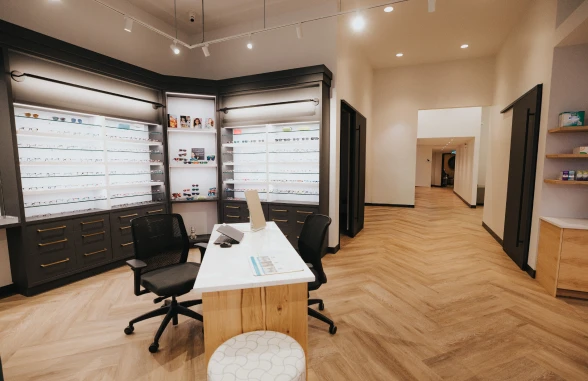
A Look Inside
InVision Eyecare




See What Our Patients Are Saying
